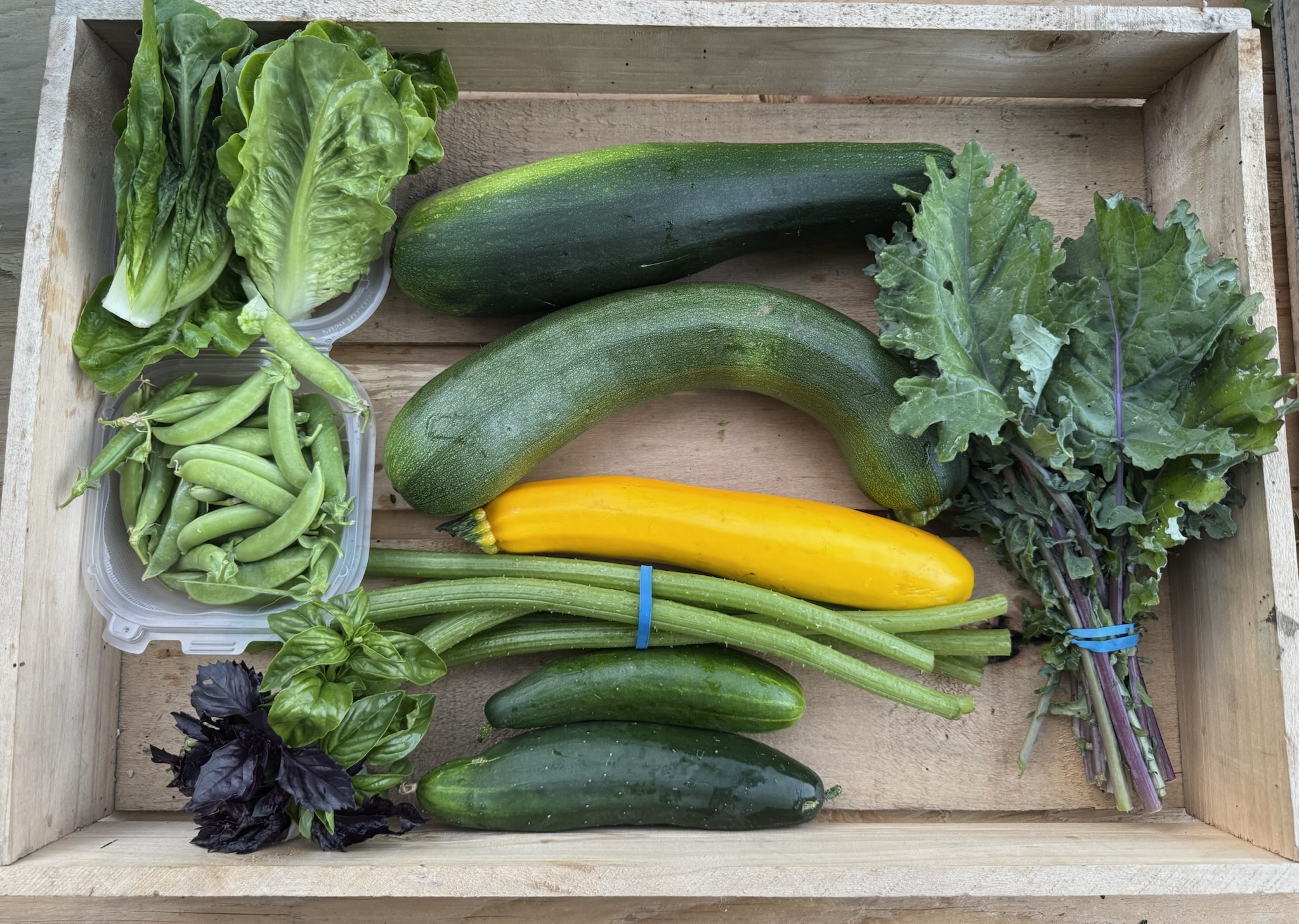
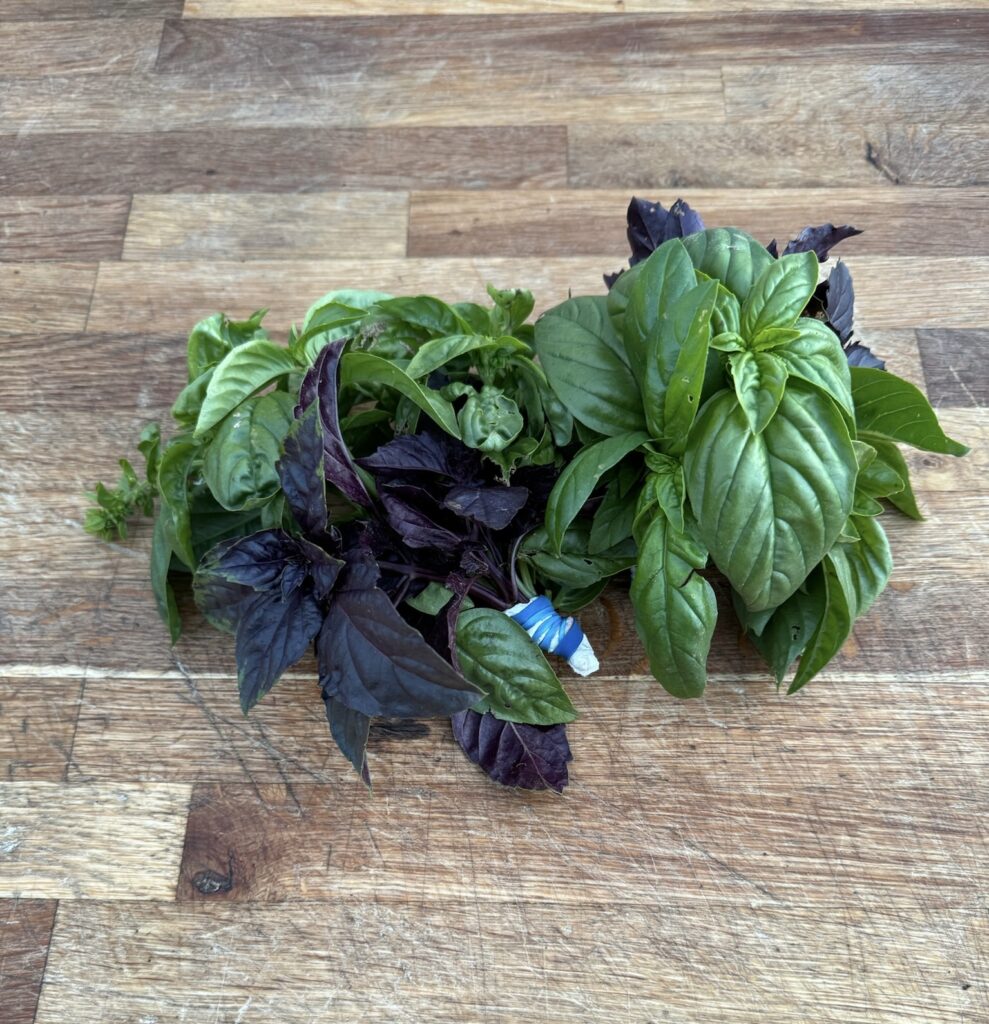
Basil Mix: Fragrant, sweet, and slightly peppery. Perfect for adding fresh flavor to salads, pasta, pizza, or blending into pesto.
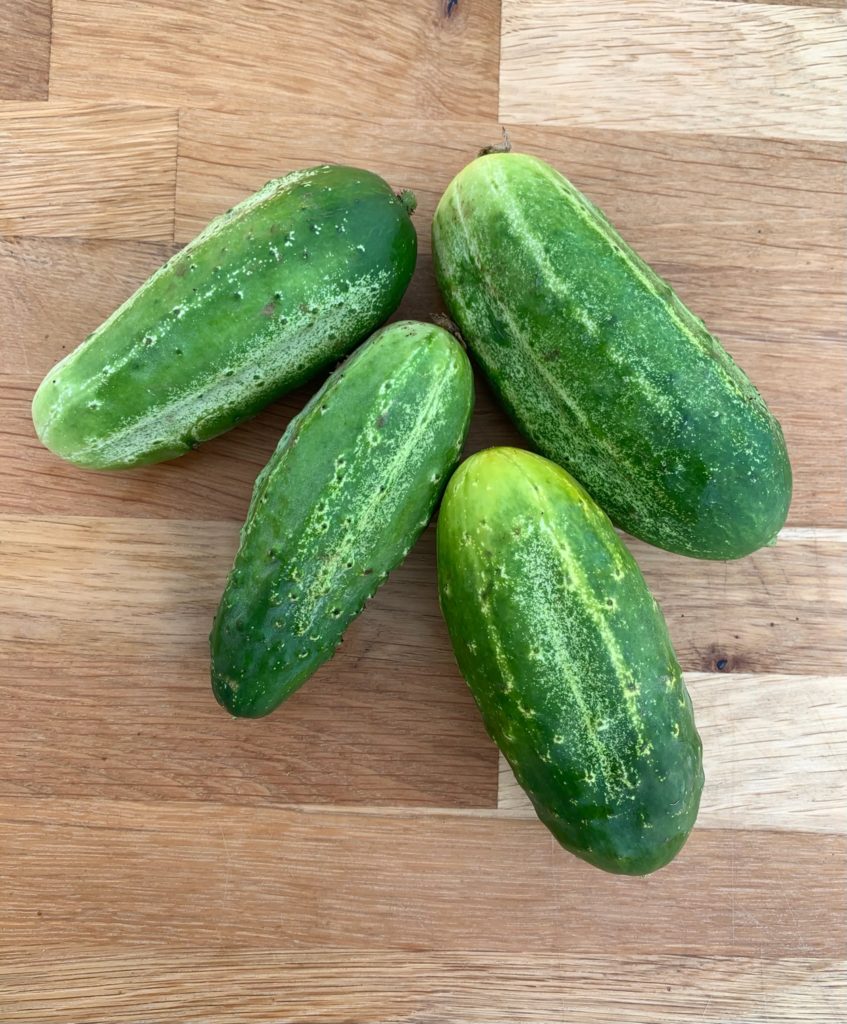
Cucumbers: Crisp and refreshing with a subtle sweetness. Perfect sliced into salads, tucked into sandwiches, or quick-pickled.
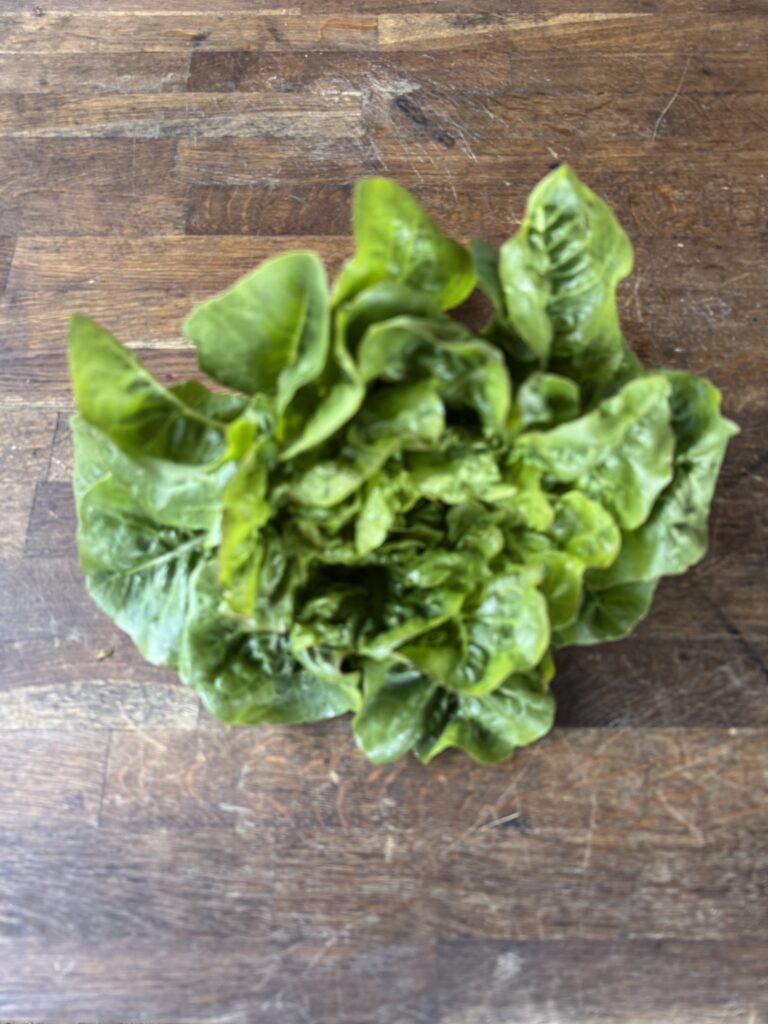
Lettuce: Light and mild with a gentle crunch. Ideal for salads, wraps, or layering in sandwiches and burgers.
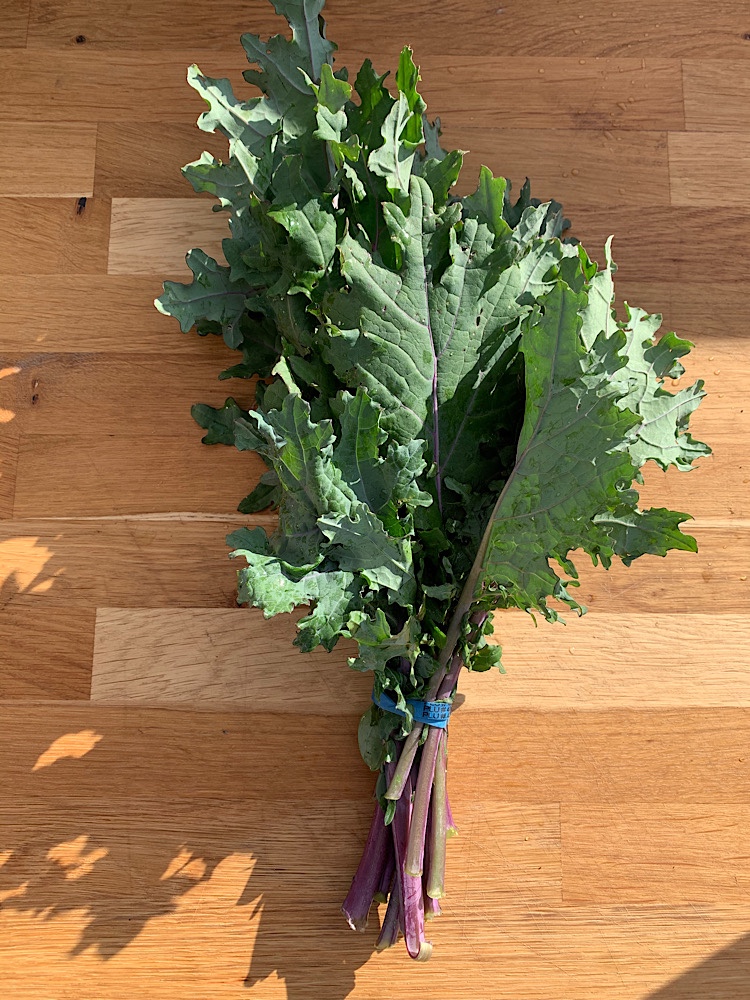
Red Russian Kale: Sweet and tender with a mild, earthy flavor. Best raw in salads, sautéed, or blended into smoothies.
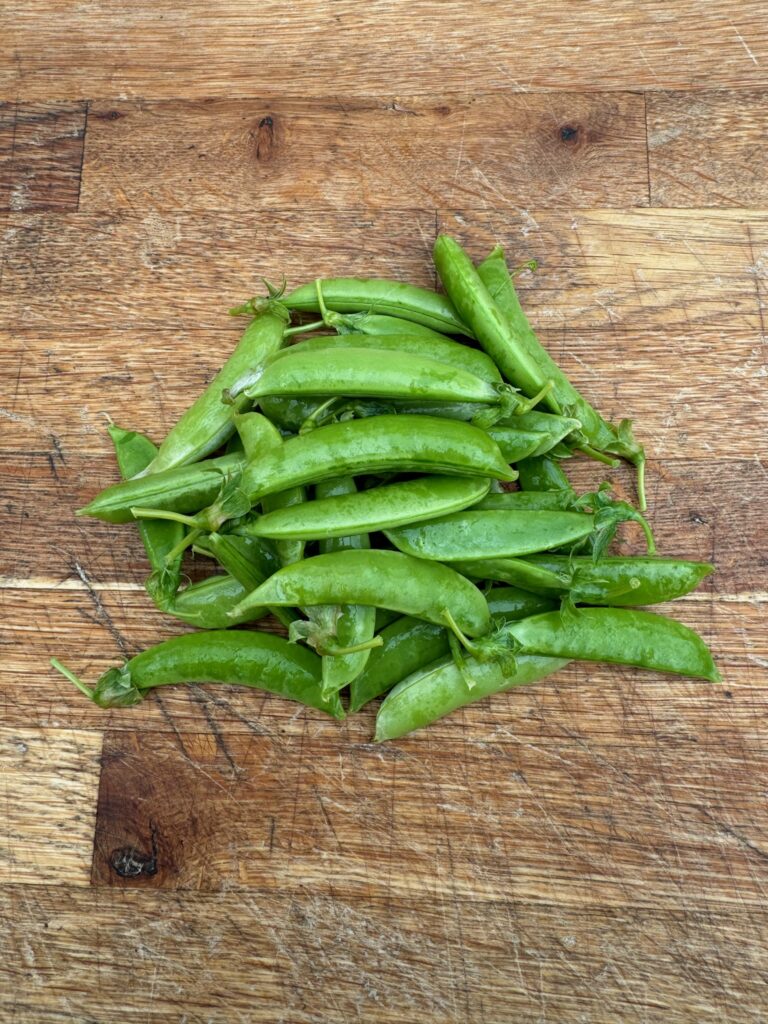
Sugar Snap Peas: Sweet and crisp, great for snacking. Also delicious sautéed, stir-fried, or tossed into pasta dishes.
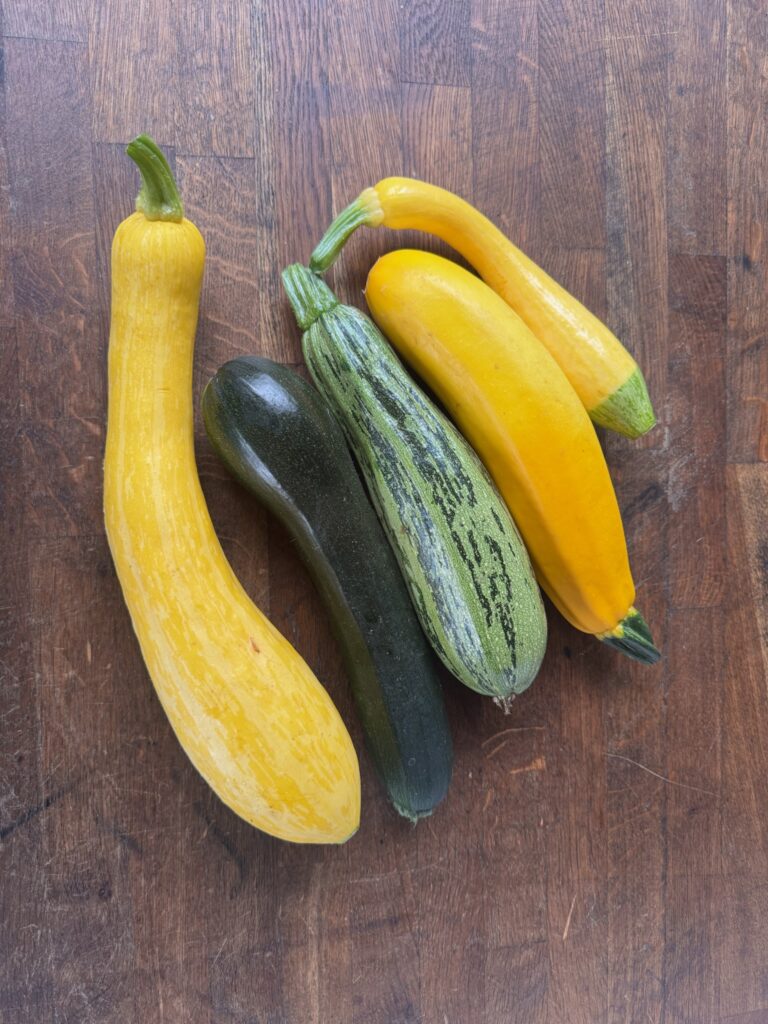
Summer Squash: Sweet and tender, can be grilled, roasted, or sautéed.
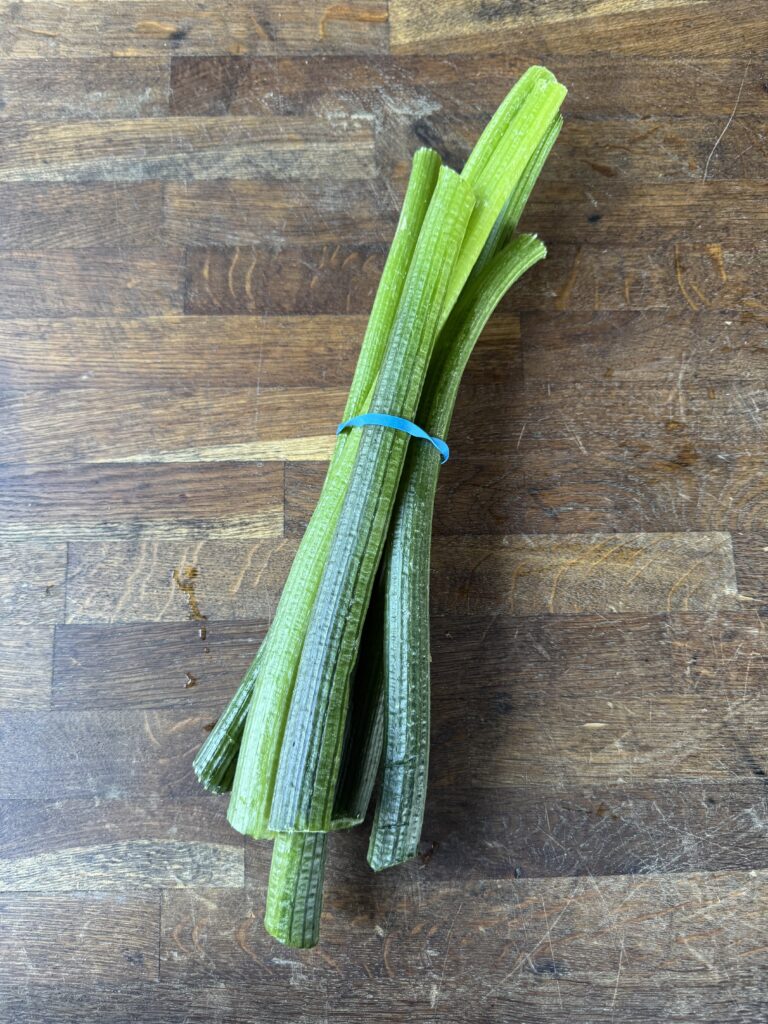
Squash Stems: Mild and green-tasting with a tender bite when cooked. Best sautéed, stir-fried, or simmered in soups. Remove tough fibers first.
A note from Chris
This Week on the Farm: Peas Fading, Tomatoes Thriving, and the Tractor’s Back in Action
This week’s box includes the last of the peas, and we mean it this time. The vines are about cooked, and so are the peas. We sampled a few… they’re still hanging on, but definitely not winning any beauty contests. Same goes for the lettuce. It’s in there, but the heat is doing its best to turn it into salad before we even pick it. The tomatoes, on the other hand, are loving it. You can almost hear them growing.
On the bright side, THE GARDEN TRACTOR IS FIXED! After months of sitting sad and broken, it’s finally running. We can mow! We can haul! We can move things without dragging them around by hand and pretending that is farm fitness.
Also… zucchini. Always zucchini.
As always, thank you for being on this wild growing adventure with us. We’re so grateful for your support, weeds and all.
Basil Mix
Basil is a highly aromatic herb with a distinct and vibrant flavor. Its leaves are glossy and bright green or purple, and they have a slightly sweet and peppery taste with hints of mint and cloves. Basil is known for its strong fragrance, which is both herbaceous and slightly floral. The scent of basil is often associated with Mediterranean and Italian cuisine, where it is widely used.
Varieties you might get
Genovese, very green large leaves
Midnight Purple, dark purple leaves
Storing
In a glass of water: Trim the stems and any leaves that would be under water. Use them first. Place the basil in a glass of water, just like you would with flowers. Store the glass in the refrigerator for up to a week or keep near a window. If you leave it out, you can use the leaves and roots will grow. Change the water every few days. Soon you can plant in a pot and have your own basil plant! Refrigerator: place basil in a plastic bag with a paper towel or cloth to maintain moisture while allowing airflow.
Prep
Rinse. Remove leaves from stems. Chop or use the whole leaf. Eat raw or cooked.
Preserving
Drying: To preserve basil, tie small bundles of basil sprigs together and hang them upside down in a dry, well-ventilated area away from direct sunlight. Allow the basil to dry completely until the leaves are brittle and crumble easily. Once dried, remove the leaves from the stems and store them in an airtight container. This dried basil can be used in various recipes, such as soups, stews, sauces, and marinades, to add a burst of flavor even when fresh basil is not available.
Freezing: Start by blanching the basil leaves quickly in boiling water for about 5 to 10 seconds, then immediately transfer them to an ice water bath to stop the cooking process. Pat dry the blanched leaves and arrange them in a single layer on a baking sheet lined with parchment paper. Place the baking sheet in the freezer until the basil leaves are completely frozen. Once frozen, transfer the leaves to a freezer-safe bag or container and store in the freezer. Frozen basil can be used in sauces, soups, and other cooked dishes.
How to use:
Caprese Salad: layer fresh basil leaves with sliced tomatoes, mozzarella cheese, and a drizzle of olive oil.
Pesto Sauce: Blend fresh basil leaves, garlic, pine nuts, Parmesan cheese, and olive oil to make a vibrant and flavorful pesto sauce. Toss it with pasta, spread it on sandwiches, or use it as a dip.
Bruschetta: Top toasted bread slices with chopped tomatoes, garlic, olive oil, and fresh basil for a delicious bruschetta appetizer.
Pasta and Pizza: Sprinkle chopped or torn basil leaves over pasta dishes or use them as a topping on homemade pizzas.
Soups and Stews: Add fresh basil leaves to soups, stews, and sauces near the end of cooking.
Garnish: Use whole basil leaves as a garnish for various dishes, including salads, sandwiches, and even desserts.
Cucumbers are a crisp and refreshing vegetable with a mild, subtly sweet flavor. They have a high water content, which gives them a hydrating and cooling quality. The flesh of cucumbers is pale green and juicy, with a crisp texture. They are commonly enjoyed fresh in salads, sandwiches, and wraps, or sliced as a refreshing snack.
Storing
Please refrigerate.
Prep
Rinse. Eat raw or cooked.
Preserving
Pickling: To make refrigerator pickled cucumbers, start by washing and thinly slicing the cucumbers. Place the cucumber slices in a clean, sterilized jar or container. In a separate bowl, combine equal parts of water and vinegar (such as white vinegar or apple cider vinegar) along with salt and sugar to taste. Stir until the salt and sugar dissolve completely. You can also add spices like dill, garlic, mustard seeds, or red pepper flakes for extra flavor. Pour the vinegar mixture over the cucumber slices, making sure they are fully submerged. Place a lid or cover on the jar and refrigerate for at least 24 hours to allow the flavors to develop. The pickled cucumbers will keep well in the refrigerator for up to a few weeks, and they can be enjoyed as a tangy and refreshing snack or used as a topping for sandwiches, salads, or tacos.
How to use
Fresh in salads: Cucumbers add a crisp and refreshing element to salads. Simply slice or dice them and toss them with other vegetables, greens, and your favorite dressing.
Cool and refreshing snack: Slice them into rounds or sticks and enjoy them plain or with a dip like hummus or tzatziki.
Cucumber sandwiches: Make a classic cucumber sandwich by layering thin cucumber slices on bread spread with cream cheese or butter. Add a sprinkle of salt and pepper for extra flavor.
Gazpacho or cold soups: Blend cucumbers with other ingredients like tomatoes, peppers, and herbs to make a refreshing gazpacho or chilled cucumber soup.
Pickles: Turn cucumbers into pickles by soaking them in a brine solution with vinegar, water, salt, and spices. Allow them to marinate for a few days to develop the desired flavor. more info above.
Sushi rolls: Use cucumber slices as a filling in homemade sushi rolls for a crunchy texture and refreshing taste.
Cucumber water: Infuse water with cucumber slices for a refreshing and hydrating beverage. Add mint leaves or lemon slices for extra flavor.
Cucumber cocktails: Blend cucumber slices with your favorite fruits and herbs to make refreshing cocktails or mocktails.
Cucumber salsa: Dice cucumbers and mix them with tomatoes, onions, jalapeños, cilantro, and lime juice to create a flavorful salsa.
Cucumber noodles: Spiralize or julienne cucumbers to create "noodles" and use them as a base for salads or as a lighter alternative to pasta in dishes like cold sesame cucumber noodles.
Head Lettuce
Lettuce, a leafy green vegetable, is known for its mild and refreshing taste. With its crisp texture and delicate flavor, lettuce offers a light and cooling sensation in the mouth. The leaves are often tender and slightly sweet, accompanied by a subtle hint of bitterness that adds depth to its overall taste.
Prep
Rinse. Remove leaves from the base, chop or add whole leaves. Eat raw or cooked. If the lettuce starts to wilt, you can revive it by soaking the leaves in ice water for a few minutes before patting them dry and using as desired.
Storing
It's best to use it within a few days for optimal flavor. To store it, place unwashed leaves in a bag or a container lined with a dry paper towel to absorb excess moisture. Seal the bag or container loosely to allow for some airflow. Store the bag in the refrigerator's crisper drawer, where it will stay fresh for a few days.
Preserving
Freezing: While lettuce doesn't freeze well on its own, you can use the freezing method for preserving lettuce for cooked dishes or for making soups, stews, or smoothies. Blanche or steam the lettuce briefly, then cool it down quickly in ice water and pat dry before freezing in airtight containers or freezer bags.
How to use:
Salads: Lettuce is a staple ingredient in salads. Use it as a base and layer on other vegetables, fruits, proteins, and dressings to create a refreshing salad.
Wraps and Sandwiches: Replace bread or tortillas with large lettuce leaves to create healthy and low-carb wraps or sandwich wraps. Fill them with your favorite fillings such as grilled chicken, turkey, or veggies.
Burgers and Sandwiches: Add a crisp lettuce leaf to your burgers or sandwiches to provide a crunchy and fresh element. It adds texture and helps balance out the flavors.
Lettuce Cups: Use large lettuce leaves as cups to hold flavorful fillings like stir-fried vegetables, seasoned meats, or grains. This makes for a light and refreshing meal or appetizer.
Soups and Stews: Add shredded lettuce to hot soups or stews just before serving. The lettuce will wilt slightly and add a refreshing touch to the warm dish.
Stir-fries: Toss lettuce leaves into stir-fries at the last minute, allowing them to wilt slightly but still maintain some crispness. They add a fresh and vibrant element to the dish.
Smoothies: Yes, you can even add lettuce to your smoothies!
Kale, a leafy green vegetable renowned for its robust and earthy flavor, belongs to the Brassica family and stands as a nutritional powerhouse. Its slightly bitter, peppery taste lends itself well to a multitude of culinary applications, from hearty salads and smoothies to sautés and soups.
Prep
Rinse. Remove from stems because leaves cook faster. Chop or use whole leaves. Eat raw or cooked. If the kale starts to wilt, you can revive it by soaking the leaves in ice water for a few minutes before patting them dry and using as desired.
Storing
To store kale, place unwashed leaves in a container lined with a dry paper towel to absorb excess moisture. Seal the bag or container loosely to allow for some airflow. Store the bag in the refrigerator's crisper drawer, where it will stay fresh for a few days.
How to use:
In salads: Kale is a sturdy green that holds up well in salads. Try massaging the kale with some olive oil and lemon juice to make it more tender.
In smoothies: Kale adds a nutritious boost to smoothies. Try blending kale with frozen fruit and yogurt for a delicious and healthy breakfast.
In soups: Kale is a great addition to soups. Add it to vegetable soup or use it in place of spinach in a classic Italian minestrone.
In stir-fries: Kale works well in stir-fries. Add it to your favorite stir-fry recipe along with other vegetables and a protein.
In pasta dishes: Kale can be added to pasta dishes for a nutritious twist. Try tossing it with spaghetti, olive oil, and garlic for a simple yet satisfying meal.
In sandwiches and wraps: Use kale leaves as a healthy alternative to lettuce in sandwiches and wraps. They add a crunchy texture and a boost of nutrition.
In pesto: Use kale instead of basil in a classic pesto recipe. It adds a unique flavor and packs in extra nutrients.
In chips: Bake kale leaves in the oven with a little olive oil and salt for a healthy and delicious snack.
Sugar snap peas are known for their sweet flavor and crunchy texture. Unlike other pea varieties, both the pod and peas inside are edible, making them convenient and enjoyable to eat raw or cooked. Sugar snap peas are bright green, with a plump, juicy interior that bursts with a fresh, mildly sweet taste reminiscent of garden peas. They are often enjoyed in salads, stir-fries, or simply as a snack on their own.
Prep
Sugar snap peas only need the stem end removed to enjoy. Rinse before eating. They can be eaten raw or cooked. Note that fuller pods might have some strings that need to be removed.
Storing
Sugar snap peas should be used sooner rather than later. Place the unwashed sugar snap peas in a bag or a container lined with a dry paper towel to absorb excess moisture. Leave the bag slightly open or use a container with ventilation to allow for some airflow. Store the sugar snap peas in the refrigerator's crisper drawer.
How to use:
Snacks: Enjoy sugar snap peas raw as a crunchy, healthy snack on their own or with dips like hummus or ranch.
Stir-Fries: Add sugar snap peas to stir-fries for a crisp texture and sweet flavor. They cook quickly, so add them near the end of cooking.
Salads: Toss raw or lightly blanched sugar snap peas into salads for a fresh, sweet crunch.
Side Dish: Steam or sauté sugar snap peas with a little garlic and olive oil for a simple, tasty side dish.
Soups: Add sugar snap peas to soups for a bright, crisp vegetable component.
Pasta: Include sugar snap peas in pasta dishes for a pop of color and a sweet, crisp bite. They can be added to both hot and cold pasta salads.
Roasting: Toss sugar snap peas with olive oil, salt, and pepper, then roast them in the oven until tender.
Summer Squash
Summer squash refers to a variety of tender, edible gourds that are harvested during the summer months. They typically have a vibrant, yellow or green skin and a mild, slightly sweet flavor. Summer squash comes in various shapes, including elongated, cylindrical zucchini and round or bulbous varieties like pattypan and yellow crookneck squash. The flesh is tender and succulent, with a delicate texture that holds up well in both raw and cooked preparations.
Prep
Rinse. Eat raw or cooked.
Storing
Handle gently. The skin is thin and fragile. Keep on the counter and use within a week. If you aren't going to use them right away keep in the refrigerator.
Preserving
Freezing: Wash and slice the squash into desired shapes, such as rounds or cubes. Blanch the slices in boiling water for a couple of minutes, then quickly transfer them to an ice bath to cool. Drain well and pat dry. Arrange the slices in a single layer on a baking sheet and freeze until firm. Transfer the frozen slices to airtight freezer bags or containers, removing as much air as possible. Label and date the packages, then store them in the freezer for up to 8-10 months.
Dehydrating: Slice the squash into thin rounds or strips. Arrange the slices on dehydrator trays or a baking sheet lined with parchment paper. Set the dehydrator to the appropriate temperature for vegetables or use the oven on its lowest setting. Dry the slices until they are crisp and brittle. Store the dehydrated squash in airtight containers or resealable bags. Rehydrate the slices in water or broth before using them in recipes.
How to use:
Grilling: Slice the squash into thick rounds or lengthwise strips and brush them with olive oil and seasonings. Grill them over medium heat until tender and slightly charred.
Sautéing: Cut the squash into bite-sized pieces or slices and sauté them in a little olive oil or butter until they are golden brown and tender. You can add herbs, garlic, or other seasonings for extra flavor. Sautéed summer squash can be enjoyed as a side dish, added to pasta, or used as a topping for pizzas.
Roasting: Toss sliced summer squash with olive oil, salt, and pepper, then spread them in a single layer on a baking sheet. Roast in a preheated oven at around 425°F (220°C) for 15-20 minutes or until they are tender and caramelized. Roasted summer squash is a tasty addition to grain bowls, salads, or as a side dish.
Raw in salads: Thinly slice or julienne summer squash and add it to salads for a fresh and crisp texture.
Stuffed squash: Hollow out larger summer squash varieties like zucchini or pattypan and fill them with a stuffing of your choice, such as cooked grains, cheese, herbs, or ground meat. Bake until the squash is tender and the filling is cooked through.
Soups and stews: Add sliced or cubed summer squash to soups, stews, or chili for added flavor and texture. It cooks relatively quickly and absorbs the flavors of the other ingredients.
Spiralized: use a spiralizer to make squash noodles. You can simply sauté the squash noodles in a bit of olive oil or butter until they are tender but still retain some crunch. Top them with your favorite pasta sauce, such as marinara, pesto, or alfredo, and garnish with grated cheese, fresh herbs, or toasted nuts. You can also use spiralized summer squash in salads, stir-fries, or cold noodle dishes.
Sauce base: Summer squash can be used to create a delicious and creamy sauce that pairs well with pasta, grains, or roasted vegetables. Start by slicing the summer squash into small cubes or rounds. Steam or sauté until it becomes tender. Transfer the cooked squash to a blender or food processor and blend it until smooth. Add a splash of broth or dairy of choice, a squeeze of lemon juice, and season with salt, pepper, and herbs like basil or thyme to enhance the flavor. You can also incorporate garlic, onion, or Parmesan cheese for additional depth. Adjust the consistency by adding more broth if needed. Toss the sauce with cooked pasta or drizzle it over roasted vegetables.
Squash stems are the hollow stalks of the squash plant, often overlooked but entirely edible when properly prepared. They have a mild, slightly sweet flavor and a tender-crisp texture when cooked. The outer layer can sometimes be fibrous or spiny, so peeling or scraping it away is recommended before cooking. Once prepped, squash stems can be a flavorful addition to stir-fries, soups, or sautés, especially when paired with bold ingredients like garlic, onions, tomatoes, or coconut milk. Their sturdy structure holds up well in both quick and slow cooking methods, making them a versatile way to use more of the squash plant.
Prep
Rinse squash stems thoroughly to remove dirt and any small spines. Trim off the ends and peel or scrape away any tough or fibrous outer skin. Cut into bite-sized pieces. For a more tender texture, you can blanch them briefly before sautéing, stir-frying, or simmering.
Storing
Wrap unwashed squash stems in a damp paper towel and place them in a loosely sealed plastic bag or container. Store in the refrigerator's crisper drawer and use within a couple of days for best texture and flavor.
How to use:
Fritters or Patties: Finely chop tender squash stems and mix with grated vegetables, herbs, and a binder like egg and flour. Pan-fry into crispy fritters or savory patties.
Pasta or Noodle Dishes: Sauté chopped squash stems and toss them into pasta dishes, especially ones with light sauces like garlic and olive oil, lemon butter, or tomato-based sauces.
Rice or Grain Bowls: Add cooked squash stems to rice, quinoa, or barley bowls for texture and mild green flavor. They pair well with roasted veggies, beans, and vinaigrettes.
Egg Dishes: Stir chopped, sautéed stems into scrambled eggs, omelets, or frittatas for an earthy green bite.
Pickled: For a tangy twist, lightly pickle blanched squash stems in vinegar, sugar, and spices. This makes a flavorful topping for rice bowls, tacos, or sandwiches.
Juiced: *Suggested by a CSA member* Run peeled stems through a juicer for a refreshing, lightly earthy drink. Optionally, add cucumber, citrus or apple for a bright drink.
Meal Ideas
Stir-Fry: Sauté summer squash, squash stems, and sugar snap peas. Add kale at the end. Serve with rice.
Grain Bowl: Rice or quinoa topped with sautéed squash stems, summer squash, kale, and fresh basil. Add cucumbers and snap peas raw on top.
Side Salad: Lettuce, cucumbers, sugar snap peas, and fresh basil. Olive oil and vinegar dressing.
Soup: Simmer summer squash, squash stems, and sugar snap peas in broth. Add kale near the end.
Veggie Wrap: Lettuce wraps with sautéed squash stems, summer squash, and kale. Add cucumber slices and basil.
Pasta Toss: Cooked pasta tossed with sautéed squash stems, summer squash, kale, olive oil, and basil.
Egg Scramble: Sauté squash stems and kale, then scramble in eggs.
Grilled Veggie Plate: Grill summer squash. Serve with fresh cucumbers and snap peas.
Cucumber Salad: Sliced cucumbers and sugar snap peas with basil, olive oil, and vinegar.
Roasted Veggies: Roast summer squash and squash stems. Serve with a raw side salad of lettuce and cucumber.
Stuffed Squash: Hollow and roast summer squash, stuff with sautéed squash stems, kale, and grains.
Cold Noodle Salad: Cold noodles with cucumbers, snap peas, basil, and a light vinaigrette.
Warm Salad: Wilted kale and squash stems served over lettuce and cucumber with dressing.
Simple Side Greens: Quick sauté of kale and squash stems with garlic and olive oil.
Chopped Salad: Lettuce, cucumbers, snap peas, basil, diced squash (raw or lightly cooked), and vinaigrette.