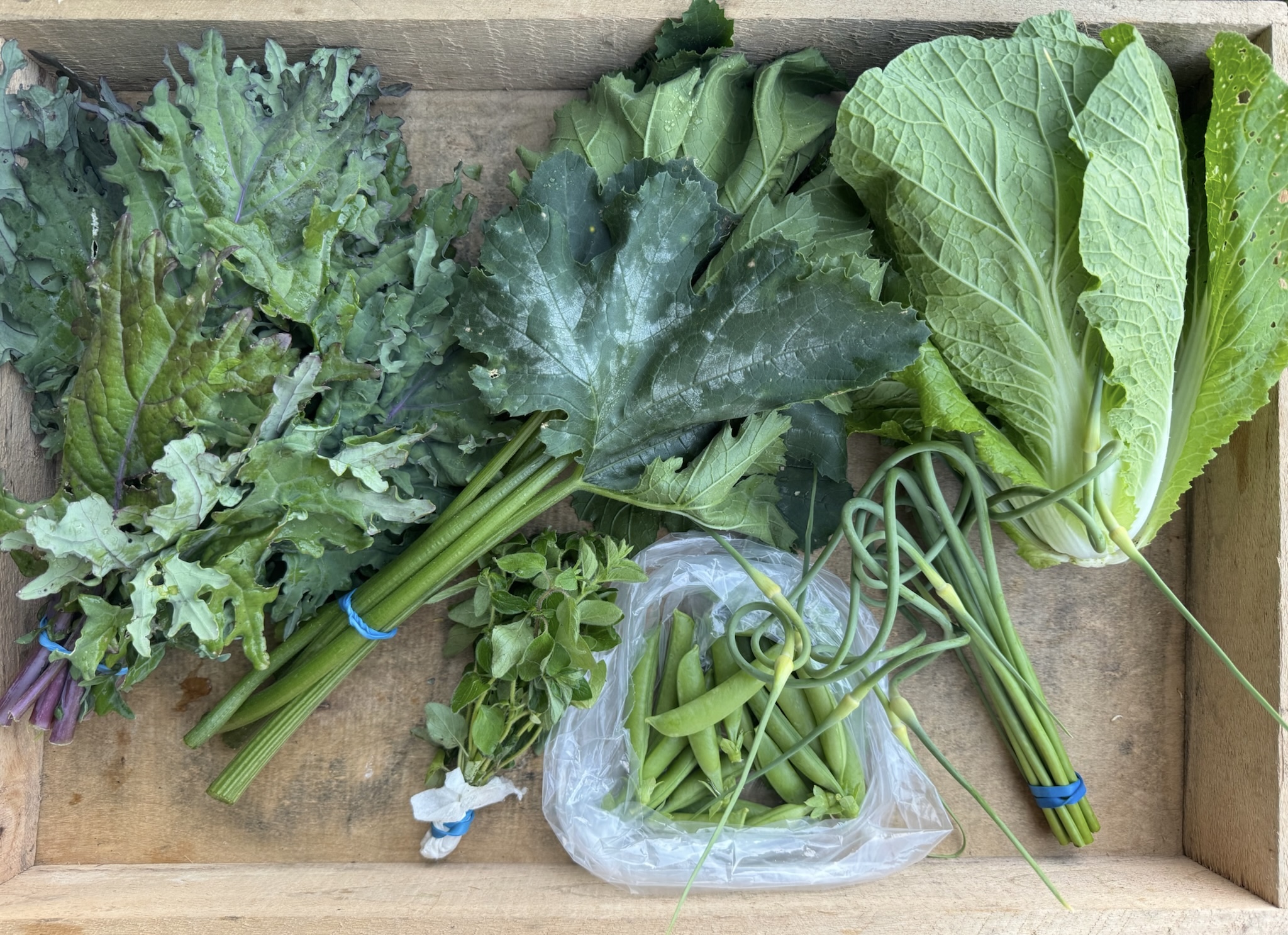
It's the first delivery of the season! Huzzah!
Earlier this week, our sheep knocked down the gate into the main CSA garden and, in what could not have been more than about 10 minutes, caused a heartbreaking amount of damage to many of the crops we had planned for the next few weeks of boxes.
The sweet corn was topped, the kale and brassicas were heavily eaten, and much of what we had been counting on for our early CSA boxes was damaged. On top of that, this week’s heat cooked much of what we had growing in the greenhouse and caused crops like radishes, turnips, and Napa cabbages to bolt, making most of them unusable for boxes. One small silver lining is that we may still be able to harvest radish pods from the radishes later on.
To be honest, we are pretty heartbroken and still a bit in shock. After an already challenging spring, this one really hurts.
We are going to keep the CSA moving forward on schedule, but we want to be honest that the first few boxes will likely be lighter than we had hoped, and some produce may not be quite as nice as what we would normally want to send.
The good news is that abundance is still on the way. The tomatoes are growing fast, squash is coming on, beans and cucumbers are growing, and later-season corn is still ahead of us. We are hopeful for what the season can still become.
Thank you for supporting our little farm through both the joyful and heartbreaking moments. We are deeply grateful for your kindness and support as we figure out how to move forward.
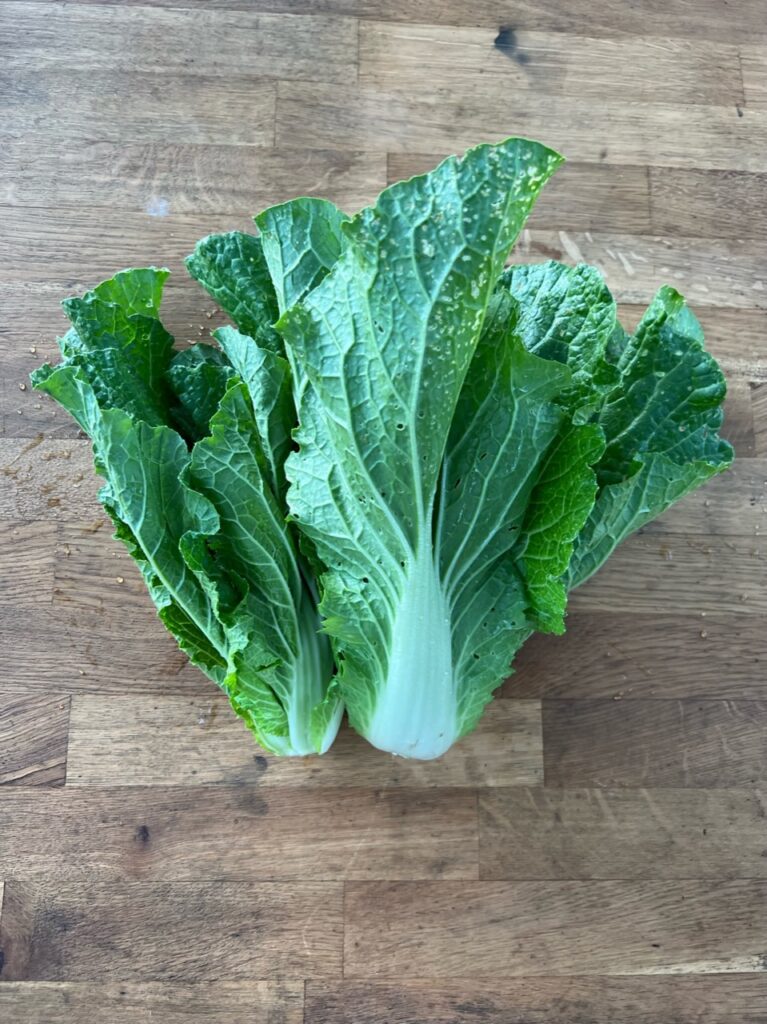
Chinese cabbage is a leafy vegetable with crisp, green to white leaves. It has a mild and slightly sweet flavor, reminiscent of regular cabbage but milder and more delicate. The leaves are tender and have a pleasant crunch when raw, making them versatile for salads and wraps. When cooked, Chinese cabbage softens and absorbs flavors well, making it a popular choice for stir-fries, soups, and stews.
Rinse. Remove leaves from the base, chop or add whole leaves. Eat raw or cooked. If the leaves start to wilt, you can revive it by soaking the leaves in ice water for a few minutes before patting them dry and using as desired.
Keep the cabbage whole or chop it into smaller pieces if desired. Next, place it in a plastic bag with a paper towel or cloth to maintain moisture while allowing airflow. Alternatively, you can store it in the crisper drawer of your refrigerator. Chinese cabbage can stay fresh for up to a week when stored properly. Avoid washing the cabbage before storing, as moisture can speed up spoilage. Remember to check on it regularly and discard any leaves that show signs of decay.
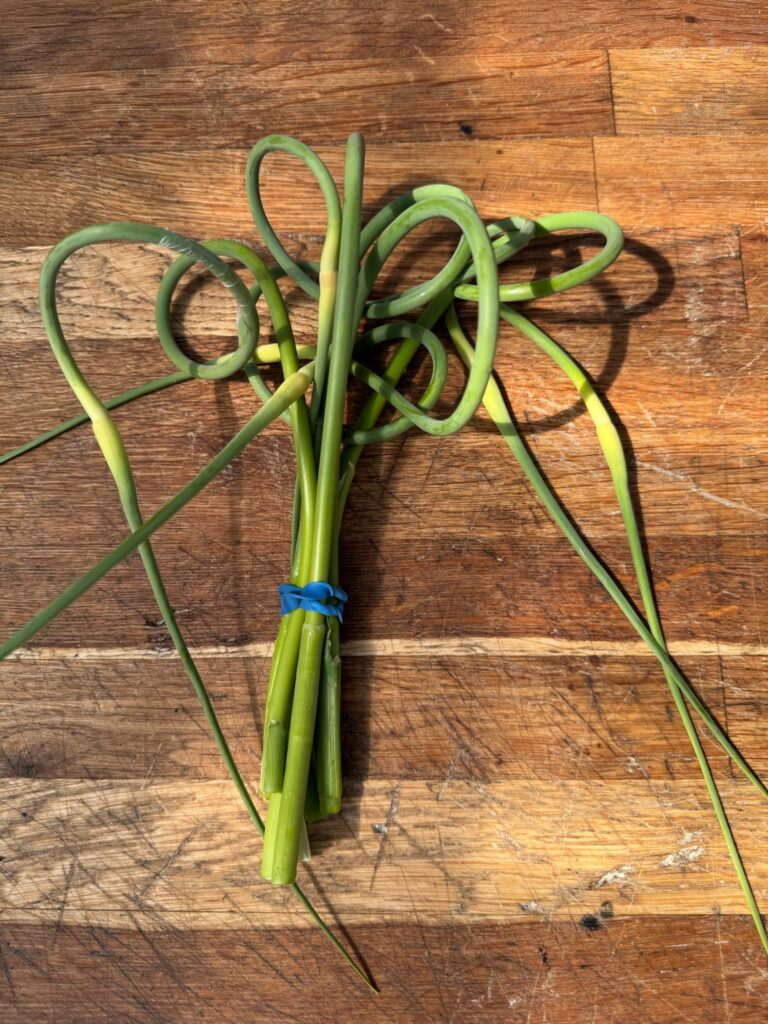
Garlic scapes are the tender, curly green shoots that grow from the hardneck garlic bulb. They have a mild, sweet garlic flavor, making them a versatile ingredient in many dishes. Garlic scapes can be used raw in salads or pestos, sautéed as a side dish, or blended into sauces and dips. Garlic scapes can be used in many of the same ways as scallions, green onions, or asparagus.
Rinse. Eat raw or cooked.
In the fridge: Place garlic scapes in a plastic bag or in an airtight container with a damp paper towel. Alternatively, you can store them in a brown paper bag, where they can last for a couple of months. Using a plastic bag can help contain their strong garlic aroma, preventing it from spreading throughout your fridge.
On the counter: Store garlic scapes in a glass of cool water for a few days, making sure to change the water daily to keep them fresh.
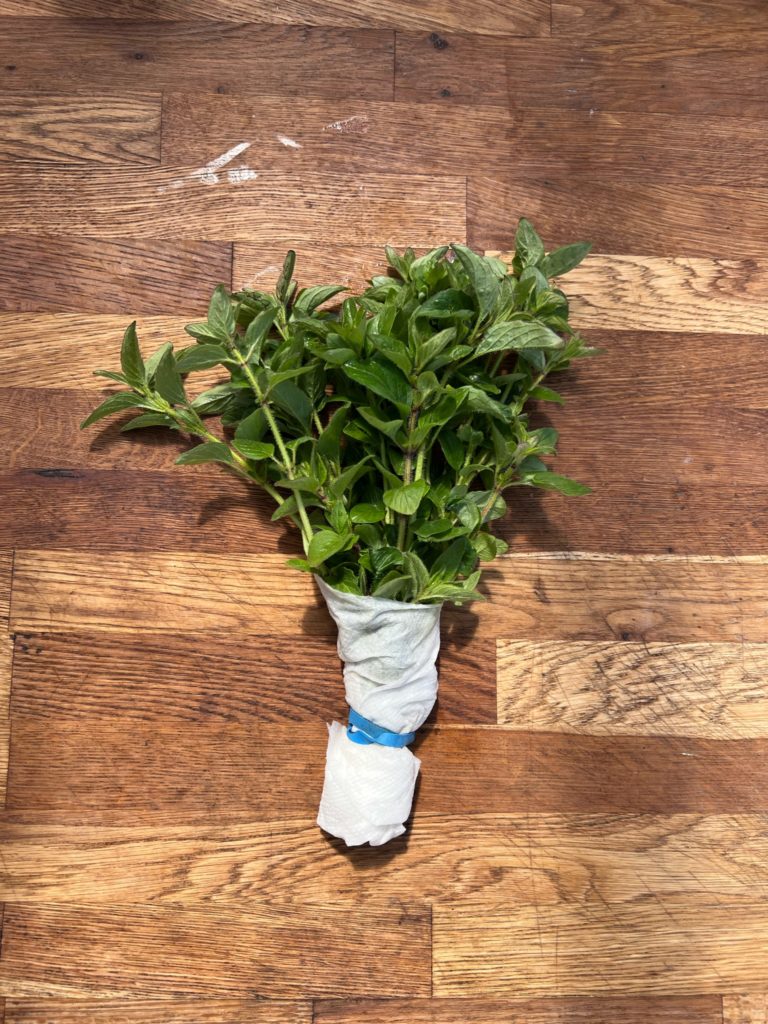
Oregano has a strong and aromatic flavor with warm and slightly bitter undertones. The taste can be described as pungent, earthy, and slightly peppery. The aroma of oregano is also quite distinctive, reminiscent of a mixture of mint, thyme, and woodsy notes. The flavor of oregano pairs well with tomato-based dishes, grilled meats, roasted vegetables, and Mediterranean cuisine in general.
Rinse. Remove leaves from stems, chop or add whole leaves. Eat raw or cooked.
It's best to use it within a few days for optimal flavor. To store it, wrap the fresh oregano in a damp paper towel and place it in a plastic bag. Store the bag in the refrigerator's crisper drawer, where it will stay fresh for a few days.
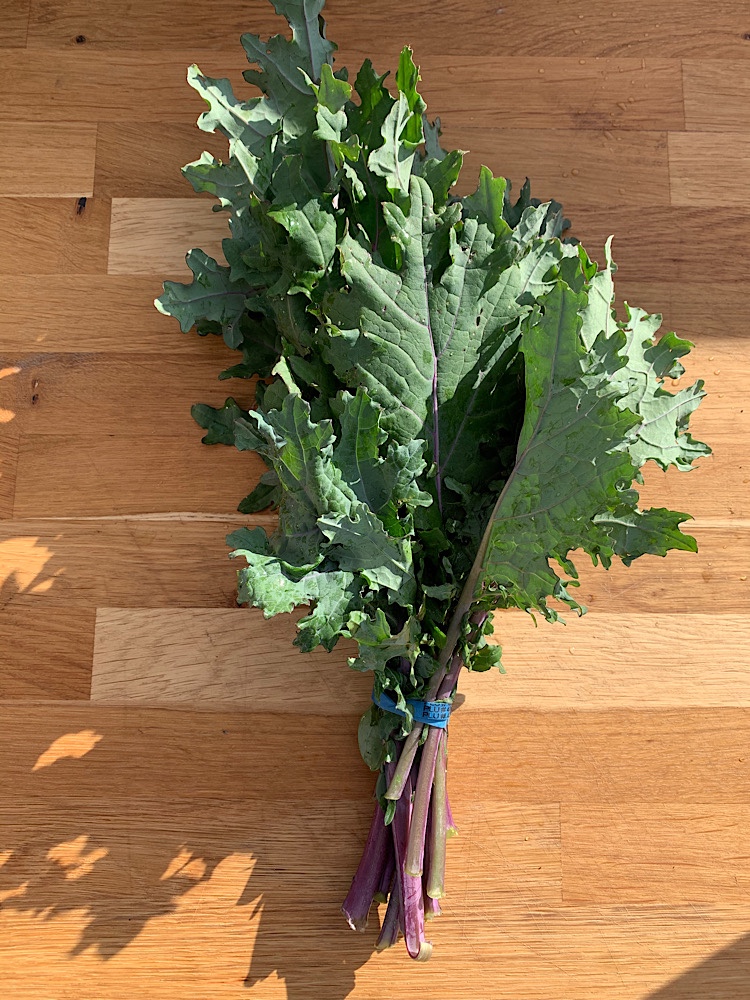
Kale, a leafy green vegetable renowned for its robust and earthy flavor, belongs to the Brassica family and stands as a nutritional powerhouse. Its slightly bitter, peppery taste lends itself well to a multitude of culinary applications, from hearty salads and smoothies to sautés and soups.
Rinse. Remove from stems because leaves cook faster. Chop or use whole leaves. Eat raw or cooked. If the kale starts to wilt, you can revive it by soaking the leaves in ice water for a few minutes before patting them dry and using as desired.
To store kale, place unwashed leaves in a container lined with a dry paper towel to absorb excess moisture. Seal the bag or container loosely to allow for some airflow. Store the bag in the refrigerator's crisper drawer, where it will stay fresh for a few days.
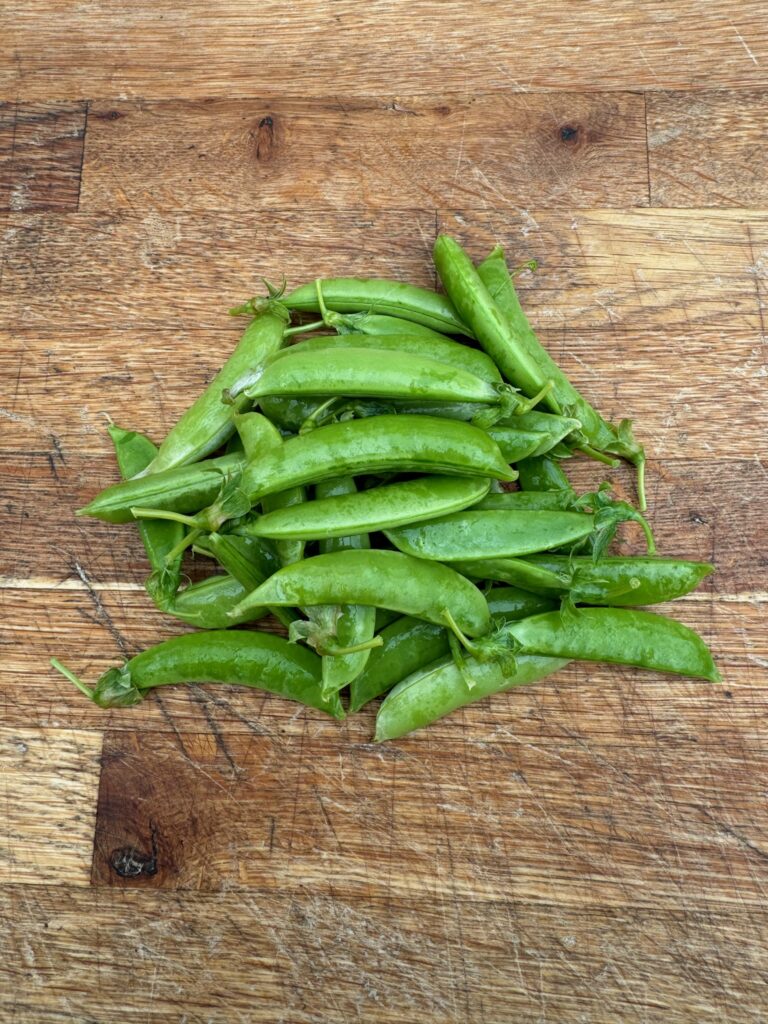
Sugar snap peas are known for their sweet flavor and crunchy texture. Unlike other pea varieties, both the pod and peas inside are edible, making them convenient and enjoyable to eat raw or cooked. Sugar snap peas are bright green, with a plump, juicy interior that bursts with a fresh, mildly sweet taste reminiscent of garden peas. They are often enjoyed in salads, stir-fries, or simply as a snack on their own.
Sugar snap peas only need the stem end removed to enjoy. Rinse before eating. They can be eaten raw or cooked. Note that fuller pods might have some strings that need to be removed.
Sugar snap peas should be used sooner rather than later. Place the unwashed sugar snap peas in a bag or a container lined with a dry paper towel to absorb excess moisture. Leave the bag slightly open or use a container with ventilation to allow for some airflow. Store the sugar snap peas in the refrigerator's crisper drawer.
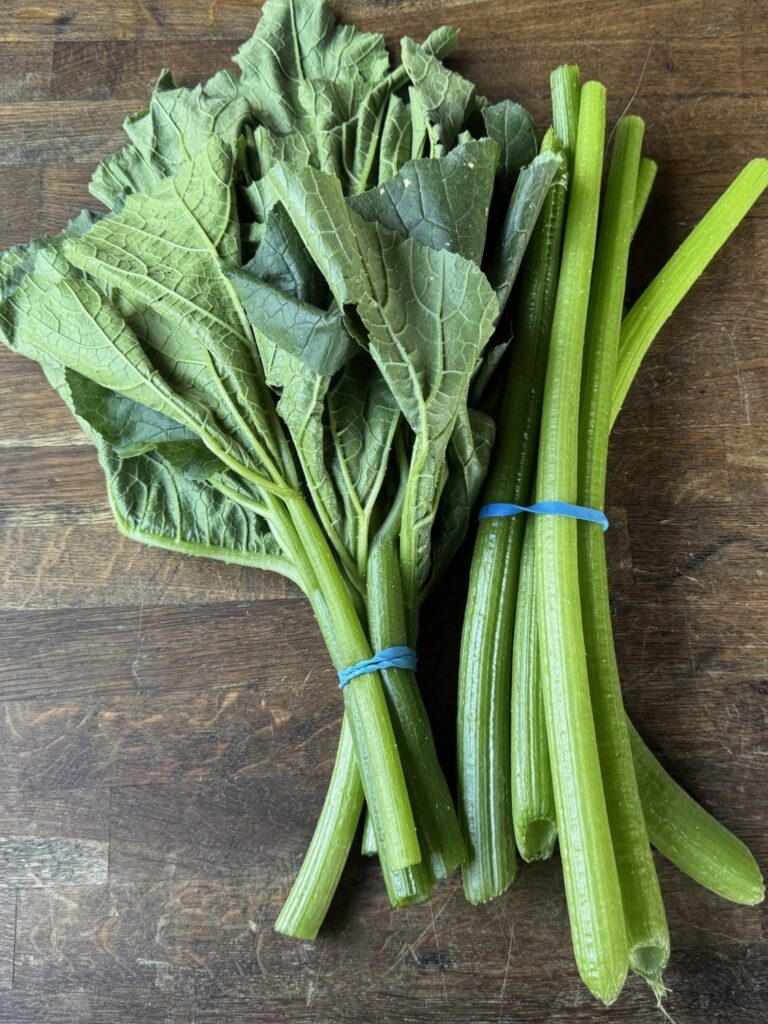
Squash leaves and stems are edible parts of the squash plant often used in traditional cooking across many cultures. The leaves are broad and tender with a mild slightly grassy flavor. The stems are hollow and mildly sweet with a pleasant crunch. Both need to be prepped by removing any tough fibers or spines and are best cooked to soften their texture. They are commonly sautéed stir fried or added to soups and stews. Squash greens pair well with garlic onions and coconut milk and are a great way to use more of the plant during the growing season.
Rinse squash leaves and stems well to remove dirt and tiny spines. Trim off any tough or woody parts of the stems and peel off any fibrous outer layers if needed. Chop into bite-sized pieces. Blanching briefly in boiling water can help soften them before adding to stir-fries, soups, or stews. Cooking them tames their slightly fuzzy texture and brings out their mild, earthy flavor.
If the leaves start to wilt, you can revive it by soaking the leaves in ice water for a few minutes before patting them dry.
Gently wrap them in a slightly damp paper towel and place them in a loosely sealed plastic bag or airtight container. Store them in the refrigerator's crisper drawer to help maintain their freshness. It's essential to use them as soon as possible, preferably within a day or two, as they are delicate and can wilt quickly. Avoid washing the blossoms until you're ready to use them, as excess moisture can lead to spoilage. With proper storage, you can preserve the delicate flavor and vibrant appearance of squash blossoms for culinary delights in various dishes.
| Meal Type | Use This Week’s Produce | Protein Ideas | Carb Ideas | Sauce/Seasoning |
|---|---|---|---|---|
| Stir-Fry | Chinese cabbage, sugar snap peas, garlic scapes, squash stems | Chicken, tofu, shrimp | Rice, noodles | Soy sauce, ginger, garlic, rice vinegar |
| Soup | Chinese cabbage, red Russian kale, squash stems, garlic scapes | White beans, chicken, lentils | Bread, potatoes | Oregano, broth, lemon |
| Pasta | Garlic scapes, red Russian kale, sugar snap peas | Chicken, sausage, white beans | Pasta | Olive oil, Parmesan, oregano |
| Grain Bowl | Sautéed Chinese cabbage, red Russian kale, squash stems, sugar snap peas | Salmon, tofu, chickpeas | Rice, quinoa | Lemon-herb sauce, tahini |
| Wrap | Chinese cabbage, red Russian kale, sugar snap peas, garlic scapes | Turkey, chicken, tofu | Tortilla, flatbread | Hummus, yogurt sauce |
| Noodle Bowl | Chinese cabbage, sugar snap peas, garlic scapes | Beef, tofu, shrimp | Rice noodles, ramen | Peanut sauce, soy-ginger sauce |
| Hash | Squash stems, red Russian kale, garlic scapes | Eggs, sausage, beans | Potatoes | Garlic, paprika, hot sauce |
| Egg Dish | Chinese cabbage, red Russian kale, garlic scapes | Eggs, cheese | Toast, potatoes | Oregano, black pepper |
| Curry | Chinese cabbage, red Russian kale, sugar snap peas | Chickpeas, chicken, tofu | Rice | Curry paste, coconut milk, lime |
| Roasted Veggie Plate | Squash stems, sugar snap peas, red Russian kale | Chicken, pork, tempeh | Potatoes, grains | Garlic, oregano, olive oil |